One-minute film · Synapse · drug targets
One gap, many medicines
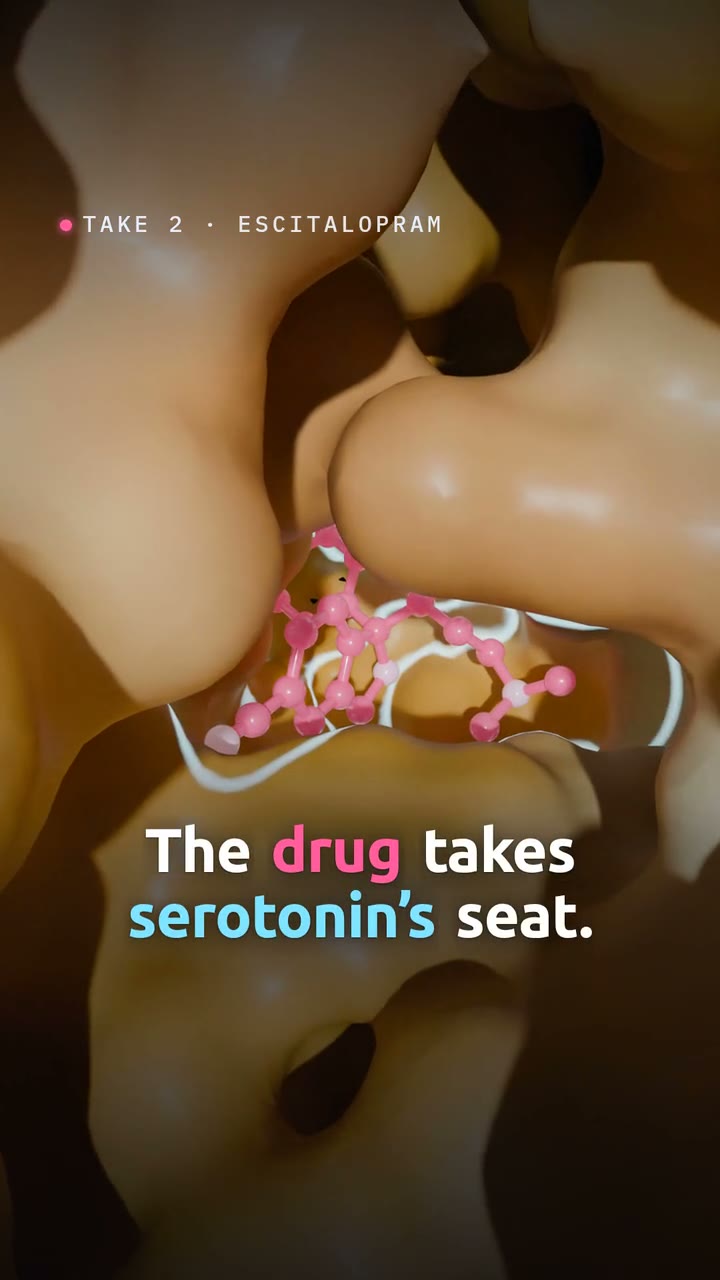
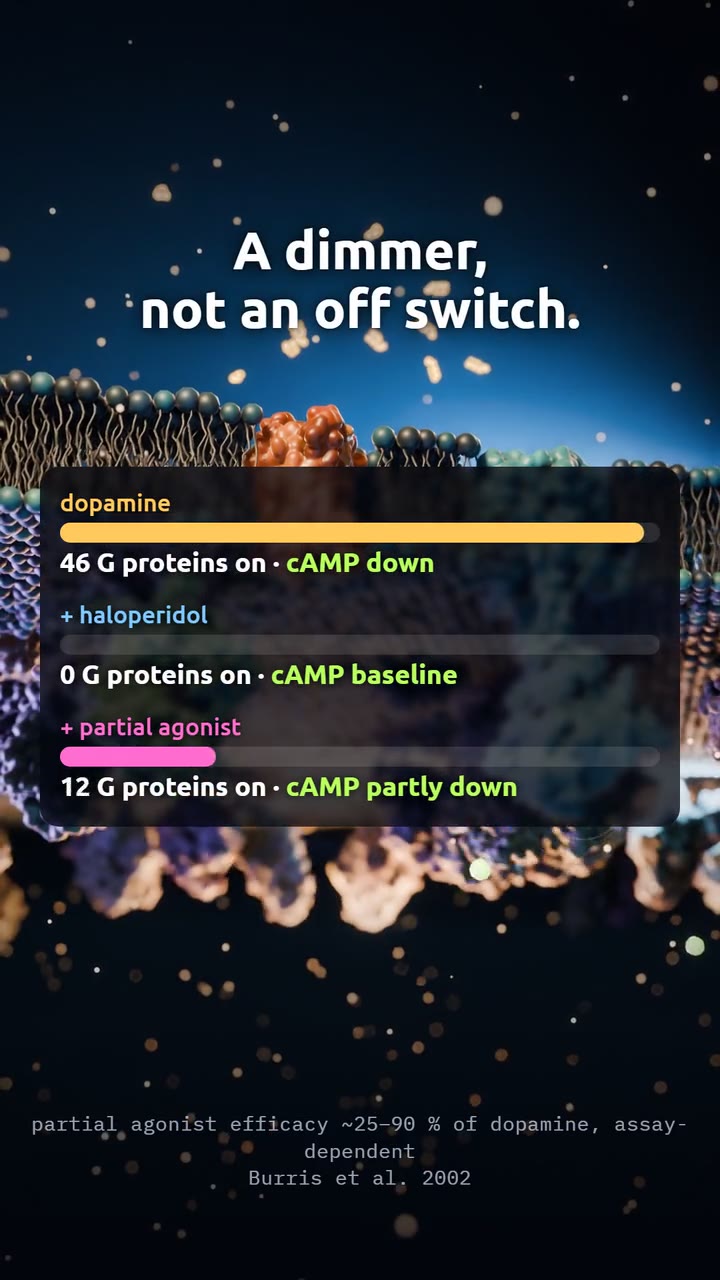
The synaptic cleft is a gap about 20 nanometres wide, held together by adhesion proteins such as neuroligin and neurexin. The film flies through one synapse as a vesicle releases its transmitter, then shows four medicines at their targets: haloperidol blocking the dopamine D2 receptor, diazepam making the GABA-A receptor respond more strongly to GABA, escitalopram blocking the serotonin transporter, and LSD binding the 5-HT2A receptor as part of the receptor closes over it like a lid.
Each drug sits in the pose measured in its published structure.
In the brain these targets sit at different synapses; the film gathers them into one composite synapse. The motion is illustrative; the structures and drug poses are real.
Made in the Landau Lab in October 2026 as a one-minute trailer for the CINP International Course in Psychopharmacology (2027).
Where the images and numbers come from
Sources
- Fan et al. 2020, Nat Commun (haloperidol bound in the dopamine D2 receptor, PDB 6LUQ)
- Masiulis et al. 2019, Nature (GABA-A receptor with diazepam and GABA, PDB 6HUP)
- Coleman, Green & Gouaux 2016, Nature (serotonin transporter with escitalopram, PDB 5I71)
- Kim et al. 2020, Cell (5-HT2A receptor with LSD, PDB 6WGT)
- Araç et al. 2007, Neuron (neuroligin-1 / neurexin-1β adhesion complex across the cleft, PDB 3BIW)