Watch/Films, explainers and lectures
Watch, then go deeper
Short films about how we work, and narrated lectures we made for students. Each one shows where its images come from.
 13:36
13:36
Featured · Lecture · Students
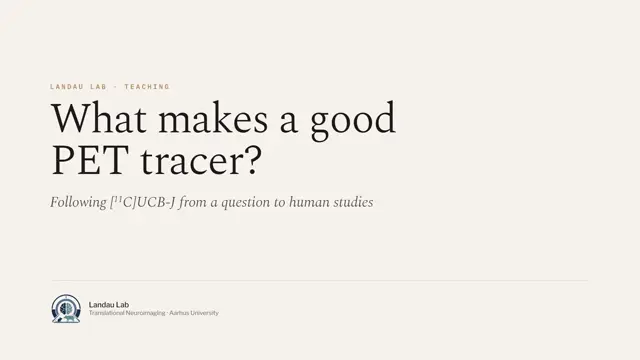
What makes a good PET tracer?
Follow one tracer, [11C]UCB-J, which binds the synaptic vesicle protein SV2A (used as a proxy for synaptic density), from a biological question to studies in people, using the lab's own rat and minipig data. Five times it pauses so you can decide what happens next.
Jump to a chapter
- The question0:50
- The candidate1:28
- What the signal means3:48
- Behaviour in vivo5:51
- Reliable numbers7:37
- Towards humans10:12
- An open question12:15
- Length
- 13:36 · narrated · captions · 5 questions
- Themes
- Synaptic imaging
- Sources
- Lab papers (CC BY 4.0), listed in the video
Plays on the lab's teaching site, with captions and chapters.
Our research & methods
Films and explainers about the lab's own work, built from our published figures and data.
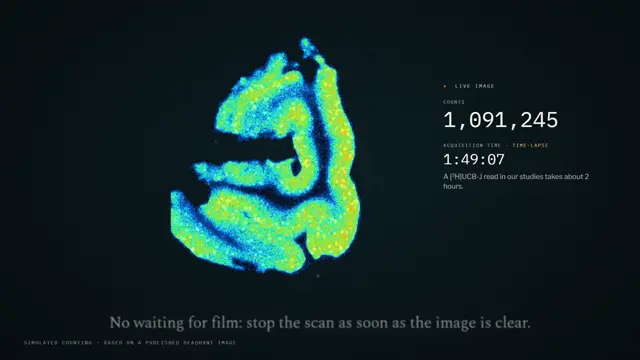 0:48Methods filmCounting every particle, as it happensReal-time autoradiography with the BeaQuant detector: a [3H]UCB-J brain section builds up count by count.Sources: Published autoradiograms; detector and counting simulated, and labelled as suchWatch on the site
 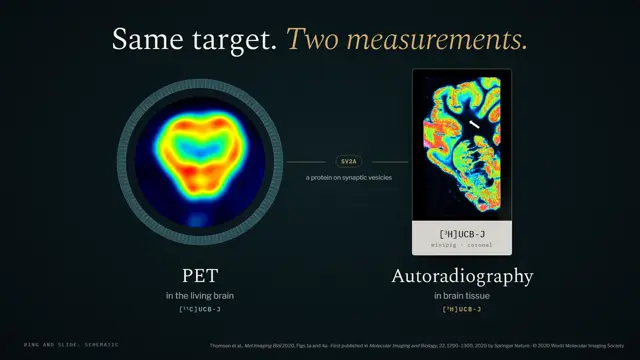 1:00Methods filmSame target, two measurementsWhy we pair PET in the living brain with autoradiography in tissue, shown with [11C]UCB-J and [3H]UCB-J.Sources: Published figuresWatch on the site
 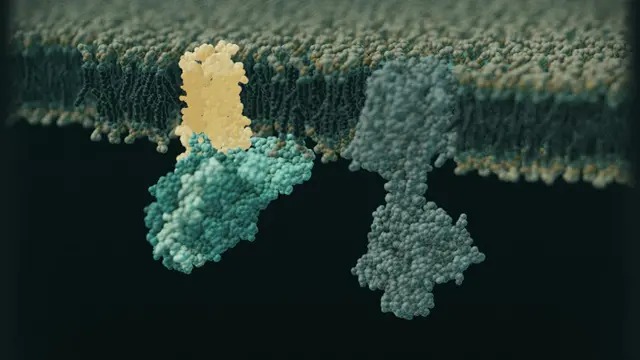 Research explainerGPR6: a receptor that is always onAn interactive animation of GPR6 signalling and the inverse agonist CVN424, rendered from published protein structures.Sources: Published atomic structures (PDB 8TYW and others), labelled as schematicWatch on the site
 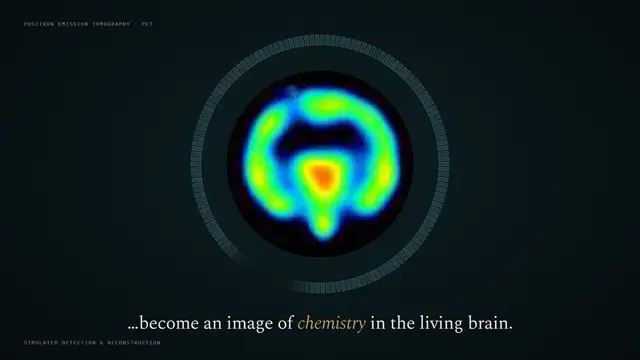 0:46Lab filmFrom signal to evidenceFrom one detected PET event to the lab's own data, methods and research themes.Sources: Built from the lab's published figuresWatch on the site
Teaching & visual explainers
Made in the lab for teaching. These explain established science; they are not reports of our own research.
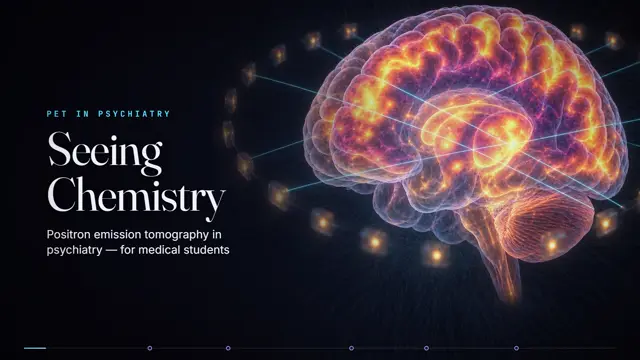 16:47Lecture · Medical studentsSeeing Chemistry: PET in psychiatryHow PET works, and what it has shown in schizophrenia, depression, OCD and addiction, with five pause-and-think questions.Sources: Published studies, listed in the videoOpen the player
 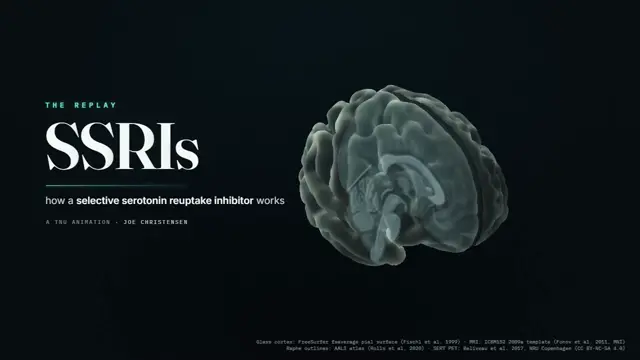 2:19Animation · Pilot · course materialSSRIs: The ReplayPilotHow a selective serotonin reuptake inhibitor works, from the real structure of the serotonin transporter up.Sources: Real transporter structures (cryo-EM); a TNU animation by Joe ChristensenOpen the player
Real sources
Built from published figures, real protein structures and the lab's own data. Each video lists its sources.
Approved by the lab
Items appear here once the lab has approved them for the website. The scientific review of some pages they link to is still in progress, and those pages are marked as drafts.
Clearly labelled
Teaching explainers are marked as such, separate from films about our own research. Pilots are labelled as pilots.